CA
CA  ES
ES  EN
EN  FR
FR 
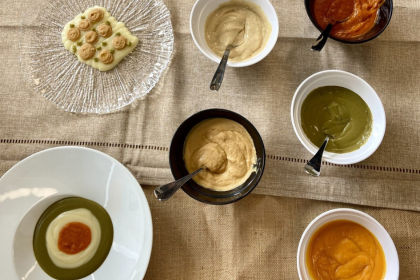
Beyond the award won at the Horeca Awards (Alimentaria Exhibition 2026), both entities are consolidating a successful model based on academic research, service to patients at the Mataró University Hospital, and the fifth-range development of texture-modified diets in the High-Performance Kitchen.
A Science-Based “Win-Win” Model
The success of this collaboration is not limited to service excellence; it is founded on solid intellectual and academic production.
In 2025, over 16,000 texturized diets were served at the Mataró Hospital, which translates to about 40–50 daily diets across all hospitalization units. Compared to the 9,800 provided in 2023, the increase exceeds 60% in two years. The center is a pioneer in this model of hospital food adaptation which, going beyond conventional purées, works on dishes from three angles:
– Texture and viscosity (swallowing safety)
– Caloric and protein content (nutritional adequacy)
– Organoleptic adaptation (appetizing dishes with great flavor and presentation)
The goal is clear: for patients with dysphagia to be able to eat safely while simultaneously enjoying their meals during their admission. Oropharyngeal dysphagia is a highly prevalent and often underdiagnosed condition.
A notable milestone at the end of 2025 was the presentation of a doctoral thesis at the UAB (Autonomous University of Barcelona) that analyzes the rheological characteristics and safety of diets at the CSdM, accompanied by four benchmark scientific publications.
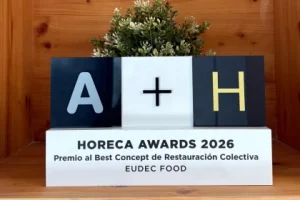
The culmination of this process has been the recognition of Eudec Food’s (the company’s specialized brand) “5th Range of Modified Textures” project, awarded Best Collective Catering Project at the Horeca Awards 2026, held within the framework of the Alimentaria-Hostelco exhibition in Barcelona last March.”The award for the EUDEC Range is a source of pride, but the real news is that the collaboration continues to grow in the fields of research, clinical safety, and efficiency,” explain the project directors, Raimon Bagó, CEO of Serhs Food, and Dr. Pere Clavé, Director of Research and Innovation at the CSdM.
The Four Fundamental Pillars of the Alliance for 2026
The continuity of this project materializes in four key areas that are already yielding tangible results:
– Success in Industrialization: The publication of an article in the journal Nutrients on the industrialization of texture-modified diets for the nutritional treatment of elderly hospitalized patients with dysphagia confirms that the CSdM kitchen has reached exceptional standards of quantity, quality, and safety. The collaboration with Serhs Food’s High-Performance Kitchen (CAR) in Mataró is further consolidated.
– Innovation in Hydration: The launch last March of the daily-made gelled waters project—prepared directly in the Consortium’s own kitchen with rheological control for optimal viscosity—aims to solve one of the greatest challenges for patients with swallowing difficulties: dehydration.
– R&D and Academic Leadership: The participation of Marta Massó, a Serhs Food technician, in the UAB Master’s Degree in Dysphagia, and the close collaboration between researchers from the CSdM and the Fundació Salut (FCSdM) to ensure rigorous textural control of products in the CSdM Rheology laboratory.
– Social Impact at the Arboç School: The implementation of the EUDEC line at the l’Arboç Special Education School of the Fundació Maresme, where children and adolescents with disabilities and dysphagia benefit from adapted menus featuring new regeneration and plating protocols.
This strategic alliance demonstrates that combining the clinical expertise of the public sector with the productive and innovative capacity of SERHS Food not only garners recognition but also actively contributes to transforming the reality of patients and their community.