 CA
CA  ES
ES  EN
EN  FR
FR 
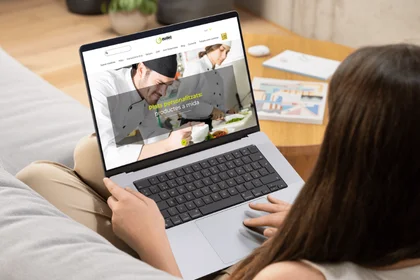
The 5th-range specialist brand, Eudec, has updated its web environment to offer a more agile, intuitive, and direct tool for collective catering professionals. This digital platform centralizes the entire range of products and facilitates the functional consultation and download of various specialized catalogs.
With more than 30 years of experience in the sector, the new website reflects Eudec’s firm commitment to food safety and transparency. The new space allows for an in-depth look at the capacity of its High Performance Kitchen (CAR), a 2,500 m² facility equipped with the latest technology and backed by the FSSC 22000 v.6 certification—key elements for providing excellent service in collective catering.
Through the portal, managers can quickly access a portfolio of more than 500 dishes, available in single-serving, multi-portion, and specialty formats. To ensure rigor in service, the website incorporates a practical section with instructions for use to interpret labels and guarantee optimal regeneration of every recipe.
The different sectors are organized visually to cover all demands of the collective catering market:
– Hospitals and Healthcare Centers: 5th-range solutions including basal menus, low-sodium diets, texture-adapted recipes, and individual formats.
– Nursing Homes: Tailor-made menus focused on the well-being and specific nutritional requirements of the elderly.
– Texture-Modified Diets: Tools for the socio-sanitary sector with easy-to-swallow dishes that preserve safety and original flavor for people with dysphagia.
– Home Care Service (SAD): Preparation and delivery of balanced diets to ensure the nutrition of dependent people in their homes.
– Social Services: Food support for people in vulnerable situations, soup kitchens, and emergency protocols in school or healthcare settings.
– Corporate: 5th-range gastronomy designed to improve mealtime in the workplace and corporate environment.
– Horeca: Solutions for the catering and hospitality industry that allow for fast, high-quality service and simple kitchen management.
– Custom Products: Development of bespoke recipes through the R&D department to turn any idea into a real dish.
The evolution of Eudec’s website is a reflection of constant innovation in the collective catering sector. All this technology and information is placed at the service of the organization so that management and nutrition teams can focus their efforts on caring for people and managing emotions through gastronomy.
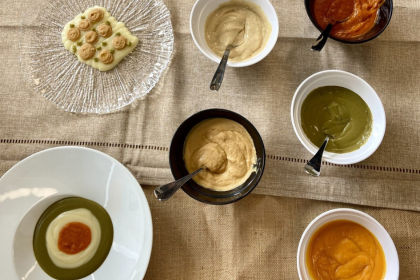
Beyond the award won at the Horeca Awards (Alimentaria Exhibition 2026), both entities are consolidating a successful model based on academic research, service to patients at the Mataró University Hospital, and the fifth-range development of texture-modified diets in the High-Performance Kitchen.
A Science-Based “Win-Win” Model
The success of this collaboration is not limited to service excellence; it is founded on solid intellectual and academic production.
In 2025, over 16,000 texturized diets were served at the Mataró Hospital, which translates to about 40–50 daily diets across all hospitalization units. Compared to the 9,800 provided in 2023, the increase exceeds 60% in two years. The center is a pioneer in this model of hospital food adaptation which, going beyond conventional purées, works on dishes from three angles:
– Texture and viscosity (swallowing safety)
– Caloric and protein content (nutritional adequacy)
– Organoleptic adaptation (appetizing dishes with great flavor and presentation)
The goal is clear: for patients with dysphagia to be able to eat safely while simultaneously enjoying their meals during their admission. Oropharyngeal dysphagia is a highly prevalent and often underdiagnosed condition.
A notable milestone at the end of 2025 was the presentation of a doctoral thesis at the UAB (Autonomous University of Barcelona) that analyzes the rheological characteristics and safety of diets at the CSdM, accompanied by four benchmark scientific publications.
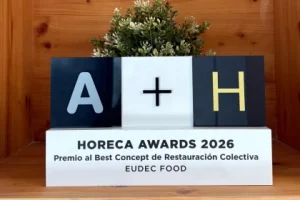
The culmination of this process has been the recognition of Eudec Food’s (the company’s specialized brand) “5th Range of Modified Textures” project, awarded Best Collective Catering Project at the Horeca Awards 2026, held within the framework of the Alimentaria-Hostelco exhibition in Barcelona last March.”The award for the EUDEC Range is a source of pride, but the real news is that the collaboration continues to grow in the fields of research, clinical safety, and efficiency,” explain the project directors, Raimon Bagó, CEO of Serhs Food, and Dr. Pere Clavé, Director of Research and Innovation at the CSdM.
The Four Fundamental Pillars of the Alliance for 2026
The continuity of this project materializes in four key areas that are already yielding tangible results:
– Success in Industrialization: The publication of an article in the journal Nutrients on the industrialization of texture-modified diets for the nutritional treatment of elderly hospitalized patients with dysphagia confirms that the CSdM kitchen has reached exceptional standards of quantity, quality, and safety. The collaboration with Serhs Food’s High-Performance Kitchen (CAR) in Mataró is further consolidated.
– Innovation in Hydration: The launch last March of the daily-made gelled waters project—prepared directly in the Consortium’s own kitchen with rheological control for optimal viscosity—aims to solve one of the greatest challenges for patients with swallowing difficulties: dehydration.
– R&D and Academic Leadership: The participation of Marta Massó, a Serhs Food technician, in the UAB Master’s Degree in Dysphagia, and the close collaboration between researchers from the CSdM and the Fundació Salut (FCSdM) to ensure rigorous textural control of products in the CSdM Rheology laboratory.
– Social Impact at the Arboç School: The implementation of the EUDEC line at the l’Arboç Special Education School of the Fundació Maresme, where children and adolescents with disabilities and dysphagia benefit from adapted menus featuring new regeneration and plating protocols.
This strategic alliance demonstrates that combining the clinical expertise of the public sector with the productive and innovative capacity of SERHS Food not only garners recognition but also actively contributes to transforming the reality of patients and their community.
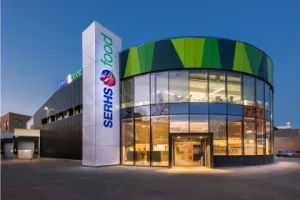

The High Performance Kitchen (CAR) of Serhs Food Mataró consolidates their sustainability commitment positioning itself as a reference in the collective catering sector, investing in a new photovoltaic station for self-consumption. During the summer months have been carried out works for the installation of 435 solar panels on the roof of the building with a power of 200 kWp, which will generate about 250,000 kWh per year, a high percentage of the total energy needed by the High Performance Kitchen (CAR) and offices, avoiding the emission of 61 tons of Co2 each year.
The company Solar Tradex, located in the Tecnocampus of Mataró, has been in charge of the project, which has been executed impeccably according to schedule. In technical terms, the monocrystalline solar modules are highly efficient and can produce a maximum power of 460 Wp. The station is equipped with solar inverters, a self-supporting aluminum structure with 10% inclination, a monitoring equipment with one app to control the main solar indicators, and a TV that will display this data on the CAR reception and a weather station, among other elements.
This new investment is expected to be amortized in 3 years and has a useful life of 30 years. The entire installation of the CAR has been designed and equipped following criteria of minimization of environmental impact and energy consumption, and this new photovoltaic station has now been added. The CAR has:
– Its own physical-chemical treatment plant with sludge decanter.
– Steam boiler with condensate recovery tank.
– LED lights
– Autoclave with cooling tower
– Refrigeration plant with glycol water
– Cardboard compaction
– Cleaning with low-pressure cleaning plants
– Highly efficient cooling equipment
– Maximum food utilization (no foodwaste).
– Ecodesign project for fast food packaging. Special mention at the Catalonia Ecodesign Award 2017.
The High-Performance Kitchen is also positioned as the most sustainable option at the level of preparation of cooked dishes if we compare it with a conventional kitchen based on 8 environmental indicators analyzed by the consulting firm INÈDIT, a recognized name in the sector: energy consumption, carbon footprint, logistics distribution, local suppliers, circular packaging, reduction of food waste, waste and cleaning products. At the energy level, the electricity consumed in the CAR is 100% of renewable origin and comparatively has a cost of 2.15 kWh/kg food, which is 3.85 times less than what a restaurant can use for kg of food (8.30 kWh/kg) or 25% less than a school kitchen (2.88 kWh/kg). In addition, with this new photovoltaic station, the energy will also be local, green and km0, which means a greater alignment with the Sustainable Development Goals (SDGs) adopted by the United Nations and applied to SERHS policy.

We have our new online store! We prepare for you our unique dishes make at home or at work.
We elaborate recipes according to the Mediterranean diet, with a lot of variety, balanced dishes without added preservatives, healthy and sustainable.
GOOD-SUSTAINABLE-NEARBY
Our dishes are cooked slowly and properly, ingredient by ingredient, from our own kitchen. Refrigerated dishes with a shelf life of more than 15 days and that are regenerated in the micro in 3 minutes.
PASTA • RICE • FISH • VEGGIE • CHICKEN • EGGS • MEAT • GOURMET
Natural food, without additives, with long cooking times that provide all the taste and mellow textures. We combine artisan cooking with innovation in first class equipment.
We work with quality raw materials-ecological-km 0. Minimum waste impact. 100% recyclable tray. We minimize packaging. We reduce energy consumption and carbon footprint (CO₂). We avoid food waste.
We adapt to your tastes by offering the dishes you like the most and incorporating the contributions proposed by users. We are close, responsive and proactive to improve your day-to-day nutrition at work. We are the first and only certified collective catering company in Spain. We have more than 40 years of experience in the sector and all our dishes are endorsed by our team of dieticians in relation to nutritional recommendations.
Visit us at www.takeeateasy.es and discover the variety of dishes we have.
We hope you like them!

On Tuesday, June 21st, the Valorafood project consortium held a final meeting to present the results and opportunities obtained throughout all the actions and tests carried out.
The session, which was held at the Serhs Food facilities in Mataró, focused on the results of the project, and was divided into sections, where each member of the consortium presented the work carried out.
Peixos Puignau explained the opportunities obtained by taking advantage of surpluses, Radi SL brought all kinds of by-products of cod, shrimp, and salmon to taste and explain, IRTA developed all the technical details about which technologies have been studied for the creation of by-products and, finally, the Foodservice Cluster explained what the continuity of the project could be like and where it should continue working.
The Valorafood project
Performs the analysis of technologies and trends in the sector for the transformation of food surpluses into by-products.
Over the last few months, the project consortium has carried out 3 visits and meetings to develop the stated objectives: the visit to the atomizers of the APC Europe plant – Essentia Protein Solutions, the Seafood Global Expo and the IRTA Pulse Combustion Drying.
The operational group of the project is made up of IRTA, RADI S.L, Serhs Food, Gustos Meritem and Peixos Puignau. Valorafood is an initiative that focuses on getting to know the fishing and industrial sector of fish processing, through meetings, visits, focus groups, immersive workshops, etc. to identify the real surpluses that fish processing companies have; and design the guidelines to revalue surpluses in the form of new previously agreed products.
This system can be extrapolated to other subsectors such as agriculture and livestock. Before entering a pilot project to develop innovative products with a high nutritional value, it is necessary to amend several challenges that we are currently unaware of:
- Quantification of the surplus of the species to be valued.
- Quantification of the volumes, regularity, specialization of the different species to revalue
- Productive design (formula, processing, storage, etc.) of the different products to be valued according to the selected species.
- Features of the product that it should have to be used by the Pulse Combustion Dryer technology or other technologies.
- Technical and economic feasibility of the designed products.
To respond to these main challenges, 3 main visits and studies have been organized. The first was carried out in the atomizers of the APC Europe – Essentia Protein Solutions plant, a global producer of protein solutions of animal origin for the food industry. All Essentia ingredients are derived from natural raw materials, mainly pork, and from beef, chicken, lamb, and fish. The methods for obtaining the protein solutions used at the plant in Catalonia are based on a simple system of separation and atomization of blood, which is the raw material for obtaining protein powders with high added value. Throughout the visit, the representatives of the operational group were able to learn about the main functionalities of the sprayers.
The second action carried out within the framework of the project was the visit to the Seafood Expo Global, where the operating group was able to analyze international trends in shellfish, the management of surpluses and the production of innovative by-products. Of the different internal visits that were made, the representatives visited the associate of the Iceland Seafood Cluster, the Icelandic delegation with which we are in contact in the context of the project, or Balfegó.
The third and last visit of this first phase of the project was in the IRTA building in Monells, to learn about the operation and applications of the Pulse Combustion Dryer (PCD), an emerging technology where the evaporation of the product liquid by direct combustion is found inside a drying chamber. Unlike other drying systems, the PCD is a system that increases productivity and maximizes the use of primary energy, improving heat transfer and reducing polluting emissions.

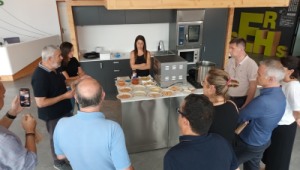

SERHS Food has signed a collaboration agreement with Heura, the Nº 1 brand in Spain, to advanve in the development of the plant-based meat experience in the menus offered in the differents centers that manage the food service within the collective restoration sector: schools, health centers, cefeteias, companies and other spaces.
Both companies have aligned their chefs, dieticians and R&D and quality teams, among others, to prepare cooked dished with the different vegetable protein options offered by Heura products. 100% vegetable meat with an innovative texture and made with a base of legumes (soy, peas).
Heura Foods was founded in 2017, in a coworking located in the center of Barcelona, in the hear of the Mediterranean Sea, with the aim of being a social mission turned into a company and empowering people to change the current food system for a more sustainable, healthy and nutritious one.
Heura defines itself as an activist company that promotes a more sustainable food system. Iy is the vegetable protein brand with the most followers in Europe and the highest engagement worldwide. The flavor and texture of the product have made it an innovative high-quality food. Heura is a plant that speads rapidly filling the world with life, nature and color. This is what the company is looking for when creating the brand. The first client was a small store, in the Poble-sec neighborhood of Barcelona and it is currently present in more than 10 countries and continues to grow with a dizzying pace.
Educa project in school canteens
Following the recommendations of the Generalitat, the Public Health Agency (PREME), is considering the development of different recipes to promote vegetable protein in school canteens. With this objective, an informative meeting was held at the Pinya de Rosa school in Blanes (Gerona) for families and collaborators of the center by the heads of Serhs Food and Heura on nutritional aspects and the benefits that this entails. In addition, there was also a tasting of products and cooked dishes, among which the Heyra lasagna with vegetable meat, the Heura meatballs in the gardener and different tastings of 100% vegetable nuggets and snacks, among others, stood out.
This is a first step in the final part of the past school year and with the prospect of incorporating new dishes cooked with Heura for the next school year and at the same time showing will to transmit as much information to families about these developments. This same idea will also be transferred to other segments of activity that Serhs Food manages, such as health centers and companies with catering spaces for their workers.
Two great examples of sustainability and inspiration in the Mediterranean Diet
Both for the part of the food product itself and for the part of the High Performance Kitchen (CAR) in Mataró where the cooked dishes will be prepared, they are examples of sustainability throughout the process. Since the CAR is accredited as more sustainable than a traditional kitchen based on a report of 8 parameters carried out by the specialized company Inédit. The comparison positions it between 25% less impact and up to almost 4 times less in aspects such as energy consumption or carbon footprint versus a restaurant.
The Mediterranean Diet has been the foundation and inspiration of both companies since their inception. For Heura its products breathe the heritage and Mediterranean gastronomy. They use high quality ingredients such as olive oil and are clean label.
It should be noted that the objective of SERHS Food is to promote a balanced and healthy diet in all its centers and in the cooked dishes prepared in the Mataró High-Performance Kitchen, and it has been promoting it for more than 40 years.
Commitment to the environment and sustainability
SERHS Food has always ensured and manifested this sensitivity to the environment, as well as the incorporation of novelties in the menus that improve the diet of users. It is the first and only collective catering company in the Spanish State, in the High Performance Kitchen, certified in the FSSC 22000 v5 standard and which also has ISO 9001:2015 on quality and ISO 22,000:2018 on food safety. Following the guidelines set by different public bodies in relation to the introduction of vegetable protein in areas such as school canteens, synergies are expected to have a real impact on new plant-based recipes and cooked dishes. The information to the interlocutors (families, managers, food professionals…) about the products in the Heura catalogue, their nutritional and organoleptic characteristics, as well as the values they provide are the first point to move forward.
It should be noted that the action plan of both companies is also based on training and demonstrations of recipes for cooked dishes to promote pedagogy and esteem for the planet and the Mediterranean diet.
Without a doubt, we are very happy about this collaboration between SERHS Food and Heura as it presents a great future perspective to incorporate new plant-based menus in the collective catering sector, promote sustainability and participate in the Good Rebel revolution!


On May 18, the day ‘Mercabarna with the communities’ was held; a half-day activity in which the current situation of the sector was analyzed, and the demands of sustainability in relation to nutrition, educational projects, regulations, purchasing policies and regarding its economic viability were discussed. An event held with full capacity, where professionals from the operating companies, suppliers and administration were able to share concerns and needs. Raimon Bagó, General Manager of SERHS Food, was one of the speakers.
Endorsed by the Foodservice commission of the Mercabarna Food Cluster, the event’s promoter, and with the support of Restauración Colectiva, as a specialist in the sector, for the organization and dissemination of the event, las week the “Mercabanar con las colectividades: cadena de valor hacia unos menús sostenibles y saludables” event took place; an activity in which 150 people signed up, all of them professionals from the RC operating companies and Mercabarna’s supplier firms. The objective, to bring the two groups closer together and to publicize and express concerns and needs of the collective catering sector.
The session was developed through two round tables and included, between one and the other, a brief visit to some spaces of the wholesale market such as the fruit area or the cooperatives.
“It is necessary for people to think and value how the menu arrives at their table every day”
After the welcome from Pablo Vilanova, director of Sustainability, Strategy and Innovation at Mercabarna, and the intervention of Sergio Gil, president of Fundación Restaurantes Sostenibles, who outlined a clear picture of how things are regarding sustainability, where we should evolve and how the restaurant industry can be involved in this paradigm shift, Raimon Bagó intervened as President of Acerco (Catalan Association of Collective Restoration Companies) and of the Foodservice Cluster of Catalonia.
Bagó offered some figures of the sector, especially highlighting and emphasizing that 10% of the citizens residing in Catalonia eat in a collective catering service daily. “There are thousands of meals a day, many of them served to vulnerable people (children, hospital patients, nursing homes…), which force us to be very professional, very responsible, demanding, and also very efficient”. The president of the Catalan employers’ association showed the strengths of the sector, highlighting about all, its resilience and demanding greater visibility and recognition, “it is necessary – he assured- that people know, think and value how the menu arrives at their table every day”. “We are a sector accustomed to suffering, that we weather almost any situation based on professionalism and adaptability, as has been shown in recent years with the issue of the pandemic, above all, but also with the problems of raw materials, transport, supplies, prices, etc.”.
Despite the positive tone of his intervention, “we have not come here to complain”, he did highlight the most serious problem that collective restoration suffers today, which is that of the exaggerated increase in prices… “increases that come to aggravate a situation already serious in itself, and dragged on for years, which keeps the sector without margin for much, since there is no way to pass on these increases”.
Healthy and sustainable menus… a long way to go, a long way to go
Under the genertic title ‘Nutrition, education, sustainability and health’, and moderated by Juanjo Jiménez, Director of Purchases of Aramark Spain, the following took part in the first-round table: Gemma Salvador (nutritionist dietitian of the General Subdirectorate oh Health Promotion. Agència of Public Health of Catalonia), Àngels Roca (general director of F. Roca), Pau López (director of Sustainable Food at Mercabarna) and Mariana Gasca (responsible for Sustainability at Mediterránea).
Gemma Salvador began by giving value to how much has been achieved “although there is still a long way to go”. With rigor, consensus, and a good alignment of all the parties involved, she assured, “it has been possible to advanced based on small changes. From the administration we have tried to contribute documents and research to support the projects of the companies. Recommendations that have taken hold over time and that are what have achieved that today, for example, 90% of school canteens are serving four or five pieces of fresh fruit a week for dessert, banishing industrial pastries and continuous sweets that were served a few years ago”. In this sense, Mariana Gasca emphasized communication and the educational projects that are carried out in many schools… “in the end”, she commented, “in matters related to nutrition, health habits, and sustainability, it is the children who are, in a certain way, educating parents by transferring what they learn in their centers”. Following the line of communication, Àngels Roca wanted to insist on the importance also of training and informing the directors of the schools “ because although it may seem that way to us, because of the environment in which we operate and the implication that we have, the message has not caught on yet… there are still many people to be convinced about the binomial food and health, and health and sustainability that, in the end, end up being indivisible concepts”.
In the end, and in summary, in order to have healthier and more sustainable school cafeterias, and therefore all kinds of communities, Gemma Salvador highlighted five points with which everyone agreed: more vegetable products, reduction of meat, reduction of plastic waste, control of food waste and, all of this, with the collaboration and participation of all parties (operators, suppliers, administration and also all the professionals who are working on the front line in the different services).
Pau López, on his part, insisted on the necessary involvement of all. “Neither Mercabarna as an institution nor wholesale market suppliers can turn a deaf ear to the issue of sustainability”. In fact, he continued, “Mercabarna is devoting a lot of effort and launching various projects and initiatives along these lines. From the very creation of a Sustainable Food Department, to the creation of the Foodback (a pioneer center in food exploitation), the Biomarket or the area of horticultural cooperatives, all our actions are carried out thinking of that paradigm shift that we all must form part”.
Making sustainability profitable
Finally, moderated by Enrique Ordóñez, Corporate Catering Manager at Grupo Quironsalud, the following took part in the second table: Albert Planas (Head of Purchasing and Logistincs at Serunion), Silvia Fillola (Director of Operations at Anna Ecológica – Grupo Veritas), Cristina Massot (Deputy Director General of Agrifood Industries and Quiality of the Department of Cliamte Action, Food and Rural Agenda) and Andrés González (manager of Colevisa).
In this second session, Cristina Massot intervened to comments on the general lines of the recently approved Green Public Procurement Action Plan for Catalonia 2022-2025, a plan approved with the aim of increasing, improving, and advancing in the application of environmental criteria in contracts so that the economic volume of the tenders that include these clauses is increased to 50% in the year 2025. Andrés González, on his part, highlighted that all the regulations that are in project of approved and the recommendations of the different administrations in the line of working and acting in a more sustainable and respectful way with the planet “represent new challenges for companies and also very exciting challenges for all professionals… what happens is that everything has a cost and has to be paid”. In the same sense, Albert Planas assured that the first thing to do “is to revalue the sector, to give it the importance is has and to allocate the necessary resources”. The two representatives of the companies celebrated the start of the conversation about the economic sustainability of the chain, from the point of view of economic efficiency and asked that the administrations work on the issue of the required criteria, keeping their feet on reality.
The table also began to debate on local and ecological products. In this sense, Silvia Fillola highlighted the great advantage for a supplier of “the security of annual planning and regularity, which only a community company can provide”.


SERHS Food Educa has managed the school canteen service of a group of centers of the Bages County Council since 2018. In the last two years, it has participated in a labor and training action promoted by the Public Employment Service of Catalonia and the Ministry of Labor and Social Economy, aimed at carrying out training practices in school canteens or transport services for young people in care and former care with a residence permit, between 16 and 21 years of age. A total of 10 people has ended up being hired by the company each year and that, in terms of SERHS Food, is a high percentatge.
It is about offering an opportunity for job placement and also regularization of the situation to people who at the same time also learn a profession and improve the learning of the Catalan language. This program is part of the values and sensitivity of the company by collaborating to the extent possible in each field of activity and environment in which it works.
TV3 echoed the story on the news, making a report that gathers the experience in the Valldaura school in Manresa of Brahim and the Ababacar Fatty. It can be found at the following link (as of minute 15:06).

Take Eat Easy has made a collaboration agreement with Amazcat, the local online shopping store, to sell the new Healthy & Sustainable cooked dishes on its website and to be able to enjoy them at home, at work or on your weekend outings. The purpose is to offer, based on the Mediterranean Diet, unique, complete dishes, with local and quality products. Balanced and varied meals designed to improve the daily diet.
Take Eat Easy is a new catering solution for companies based on 5th range cooked dishes, specially designed by a dietetics and nutrition team for individual consumption. In companies, and through a dispensing machine with refrigerated products, a wide range of refrigerated cooked dishes with a 15-day expiration date can be found available, arranged by family (PASTA • FISH • VEGGIE • CHICKEN • EGGS • MEAT • GOURMET). They are presented in very complete portions (300-400gr) and quality, ready to eat (microwave for 2-3 minutes). Now with this agreement you can also have them at home or at work by purchasing them on the online portal www.amazcat.cat.
Amazcat is presented as the new Catalan marketplace, focused on the proximity market, the “all-in-one” platform for electronic commerce in Catalonia. It is based on products made, manufactured or sold in Catalonia. You can buy it at a proximity producer or store knowing the origin of the product, with guaranteed quality. The first own online sales platform in Catalonia was launched at the end of October 2021, it has more than 500 associated businesses, and from Amazcat they have foreseen that in the coming weeks there will be about 300,000 users who will access the portal. However, the project is just in the most incipient phase. Parlem-Telecom is one of the benchmark partners, among other companies sensitive to local trade.
In relation to the range of dishes that can be purchased on the portal, it is the same as in the catalogue, about 25 in total that rotate and that can be found in the dispensing machines installed in a significant number of work centers that have opted for this innovative solution in their meals (www.takeeateasy.es). Dishes cooked properly, without haste, ingredient by ingredient, from Mataró’s own High Performance Kitchen. Natural foods, without added preservatives, with long cooking times that provide all the flavor and sweet textures. Artisanal cuisine is combined with innovation with a first-rate team. We work with quality-ecological-km 0 raw materials with the minimum impact of waste and avoiding food waste. 100% recyclable tray, minimizing packaging and at the same time reducing energy consumption and carbon footprint (CO₂).
- 1
- 2

