CA
CA  ES
ES  EN
EN  FR
FR 
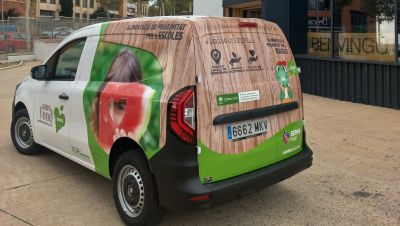
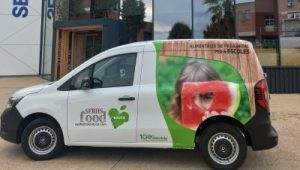
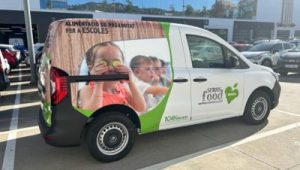
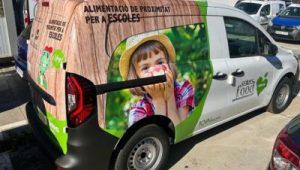
Following the objective of contributing to compliance with Law 16/2017 on climate change, which seeks to reduce greenhouse gas emissions and achieve a 50% reduction in dependence on fossil fuels in transportation, in this new school year 2023-2024, SERHS Food, as the contractor, has incorporated four electric vehicles assigned to the cafeteria service of the schools managed by the El Bages Regional Council.
This is an environmental requirement of the new tender to promote clean and energy-efficient transportation. Likewise, local products have also been incorporated for the same purpose.
SERHS Food has acquired four Renault Kangoo Van E-Tech 100% electric vehicles with the Eco environmental label and zero emissions. This new model from the brand is versatile, with ample cargo space, 300 km of autonomy, a 90 kW (120 HP) motor, and a recharge time of 170 km in 27 minutes. They have been specially labeled to convey this sustainable message within the scope of the service provided in schools.
Highlights of the cafeteria service in educational centers in Bages
There are a series of environmental, social, and technical characteristics that are significant in each area of application and aim to promote healthy, seasonal, and local food, as well as the development of new educational habits, responsible social vision, and avoiding food waste, among other considerations.
These aspects include: organic legumes, pasta, and beef; fresh fruit grown according to integrated production criteria; daily locally made bread, as well as dairy, potatoes, and lettuce from Bages. And fresh fish once a week.
SERHS Food Sustainability Strategy
The fundamental pillars of the company are food safety, nutritional quality, and sustainability, placing individual satisfaction at the center. In terms of sustainability, SERHS Food’s High-Performance Kitchen in Mataró has positioned itself as a benchmark in the collective catering sector. For over a year, it has had a new self-consumption photovoltaic station with 435 solar panels on the roof of the building with a power of 200 kWp, which will generate around 250,000 kWh per year, a high percentage of the total energy needs of the High-Performance Kitchen (CAR) and offices, as well as avoiding the emission of 61 tons of CO2 each year. The entire CAR installation has been designed and equipped following criteria for minimizing environmental impact and energy consumption. The CAR features: its own physical-chemical treatment plant with sludge settler, steam boiler with condensate recovery tank, LED lights, autoclave with cooling tower, glycol refrigeration system, cardboard compaction, cleaning with low-pressure cleaning centers, highly efficient refrigeration equipment, maximum food utilization (no food waste), eco-design project for fast food packaging. Special mention in the Catalonia Ecodesign Award 2017. SERHS Food has collaborated with the Guide for the Prevention and Reduction of Food Waste in the commercial catering sector and central kitchens of the Generalitat (2023).
Furthermore, the High-Performance Kitchen stands as the most sustainable option in terms of cooked dish preparation when compared to a conventional kitchen based on 8 environmental indicators analyzed by the renowned consultancy INÈDIT: energy consumption, carbon footprint, logistical distribution, local suppliers, circular packaging, food waste reduction, waste, and cleaning products.
In terms of energy, the electricity consumed in the CAR is 100% renewable and comparatively has a consumption of 2.15 kWh/kg of food, which is 3.85 times lower than what a restaurant can use per kg of food (8.30 kWh/kg) or 25% less than a school kitchen (2.88 kWh/kg). The new photovoltaic station provides proximity, green, and local energy, which aligns more closely with the Sustainable Development Goals (SDGs) adopted by the United Nations and applied to SERHS Food’s policy.